Artificial Intelligence Supporting Fraud Detection Across Industries
Introduction: Why Fraud Detection Requires Intelligent Technology
Fraud continues to evolve as organizations expand their digital operations across finance, healthcare, retail, insurance, telecommunications, and government services. As transactions become faster and more interconnected, traditional fraud detection methods struggle to keep pace with increasingly sophisticated threats.
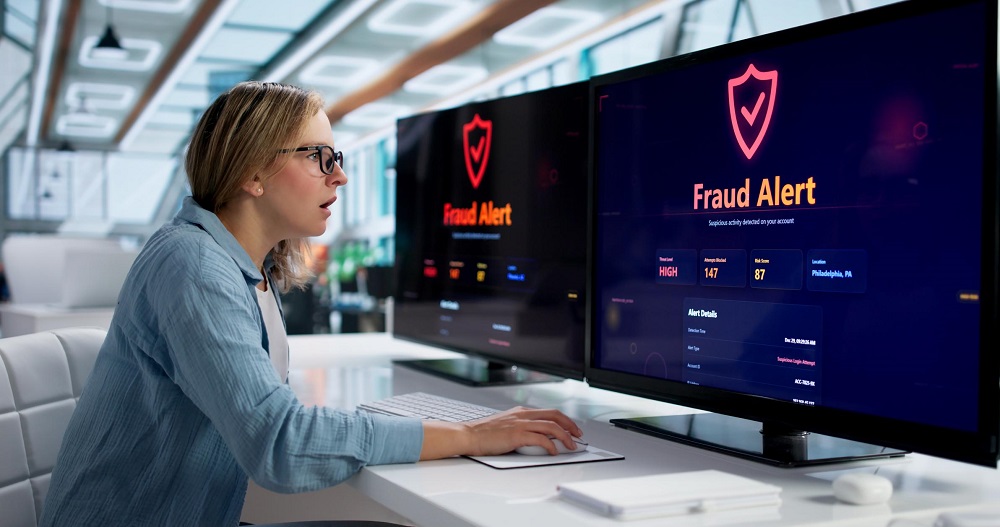
Artificial intelligence is transforming how institutions identify suspicious activity, prevent financial losses, and protect customers. Instead of relying only on fixed rules and manual monitoring, modern systems analyze behavioral patterns, detect anomalies, and respond in real time.
AI supported fraud detection improves accuracy, reduces response time, and strengthens trust across digital environments. It is now one of the most important tools supporting secure operations across industries.
Understanding the Nature of Modern Fraud Risks
Fraud risks appear in many forms depending on the industry and transaction environment.
Common fraud types include:
- identity theft attempts
- payment transaction manipulation
- account takeover activity
- insurance claim misrepresentation
- insider threats within organizations
- synthetic identity creation
- digital marketplace abuse
As digital platforms expand, fraud attempts become more complex and harder to detect through manual monitoring alone.
Artificial intelligence helps organizations identify these risks earlier and more accurately.
Limitations of Traditional Fraud Detection Methods
Traditional fraud detection systems relied primarily on static rule based monitoring. These systems flagged activity when predefined thresholds were exceeded.
Although effective in earlier digital environments, rule based systems face several limitations today.
Challenges include:
- inability to detect new fraud strategies quickly
- high false alert frequency
- delayed response to suspicious activity
- limited behavioral pattern recognition capability
- reliance on manual investigation processes
Artificial intelligence addresses these challenges by introducing adaptive detection models that improve continuously over time.
Machine Learning Identifies Hidden Fraud Patterns
Machine learning models analyze large volumes of transaction data to identify subtle patterns associated with fraudulent activity.
Unlike static rule systems, machine learning improves detection accuracy by learning from historical behavior and adapting to emerging threats.
These systems evaluate signals such as:
- unusual transaction timing
- location inconsistencies
- abnormal device usage patterns
- unexpected spending behavior
- repeated authentication failures
Pattern recognition improves early identification of suspicious activity.
Organizations benefit from stronger prevention capabilities.
Real Time Transaction Monitoring Strengthens Protection
Speed plays a critical role in fraud prevention. Detecting suspicious activity quickly reduces potential losses.
Artificial intelligence supports real time monitoring by analyzing transactions as they occur.
Real time monitoring systems evaluate:
- transaction amount deviations
- behavioral activity changes
- account access anomalies
- geographic movement patterns
- payment routing irregularities
Immediate alerts allow organizations to intervene before fraudulent transactions are completed.
Fast response strengthens customer protection.
Identity Verification Systems Improve Account Security
Identity fraud remains one of the fastest growing threats across digital platforms.
Artificial intelligence enhances identity verification through advanced authentication technologies.
These systems analyze:
- biometric facial recognition signals
- behavioral typing patterns
- document authenticity indicators
- device fingerprint characteristics
- login consistency trends
Stronger verification reduces unauthorized account access risks.
Improved authentication supports secure digital environments.
Supporting Fraud Detection in Financial Services
Financial institutions handle large volumes of transactions daily, making them frequent targets for fraud attempts.
Artificial intelligence supports banking systems by monitoring:
- credit card transaction activity
- loan application consistency signals
- online banking login behavior
- transfer routing anomalies
- suspicious withdrawal timing patterns
Early detection protects both institutions and customers.
Financial fraud prevention remains one of the most mature applications of AI monitoring systems.
Enhancing Fraud Prevention in Retail and E Commerce
Retail and digital marketplaces face growing fraud risks related to payment processing and account misuse.
Artificial intelligence helps identify suspicious retail activity through analysis of:
- unusual purchase frequency patterns
- multiple account creation attempts
- delivery address inconsistencies
- refund request irregularities
- promotional abuse signals
Retail platforms benefit from reduced chargeback losses and improved customer trust.
Fraud detection supports sustainable commerce operations.
Supporting Insurance Claim Verification Processes
Insurance providers manage complex claim review processes that require accurate risk evaluation.
Artificial intelligence helps detect claim anomalies by analyzing:
- claim submission timing patterns
- documentation consistency signals
- behavioral reporting differences
- historical claim activity trends
Improved verification supports fair claim processing.
Accurate detection reduces financial exposure for insurers.
Strengthening Fraud Detection in Healthcare Systems
Healthcare organizations face fraud risks related to billing activity, identity misuse, and service misrepresentation.
Artificial intelligence improves healthcare fraud monitoring by analyzing:
- billing pattern inconsistencies
- provider service frequency signals
- identity authentication irregularities
- prescription activity trends
Improved monitoring supports regulatory compliance and protects healthcare resources.
Fraud prevention strengthens patient trust.
Supporting Telecommunications Fraud Monitoring
Telecommunications providers face fraud risks involving account misuse and service exploitation.
Artificial intelligence helps identify suspicious telecom activity through monitoring:
- unusual call routing behavior
- international usage pattern changes
- device switching frequency
- subscription irregularities
Early detection prevents service abuse and reduces operational losses.
Telecommunications security benefits from predictive monitoring capabilities.
Reducing False Positives Through Intelligent Risk Scoring
One major challenge in fraud detection involves managing false alerts that interrupt legitimate customer activity.
Artificial intelligence improves alert accuracy through dynamic risk scoring systems.
Risk scoring models evaluate multiple signals simultaneously rather than relying on single trigger events.
Benefits include:
- improved detection precision
- fewer unnecessary account restrictions
- faster investigation prioritization
- improved customer experience
Smarter alert systems allow organizations to focus on genuine threats.
Supporting Cross Industry Fraud Intelligence Collaboration
Fraud detection improves when organizations share insights across sectors.
Artificial intelligence supports collaborative intelligence by identifying patterns that appear across multiple industries.
Shared intelligence helps detect:
- coordinated fraud networks
- synthetic identity usage patterns
- cross platform transaction manipulation
- repeated credential exploitation signals
Collaboration strengthens protection across digital ecosystems.
Cross industry insight improves overall security resilience.
Enhancing Behavioral Analytics for Fraud Prevention
Behavioral analytics plays an important role in modern fraud detection systems.
Artificial intelligence evaluates how users interact with platforms rather than relying only on transaction details.
Behavioral signals include:
- typing rhythm patterns
- navigation pathway consistency
- login session duration variation
- device usage repetition trends
Behavioral monitoring strengthens detection accuracy without interrupting legitimate activity.
User behavior analysis supports early identification of suspicious actions.
Supporting Regulatory Compliance Requirements
Organizations must meet strict regulatory expectations related to fraud prevention.
Artificial intelligence supports compliance monitoring by tracking:
- suspicious activity reporting indicators
- identity verification documentation accuracy
- transaction threshold triggers
- audit trail consistency signals
Automated compliance support improves reporting efficiency.
Regulatory alignment strengthens institutional credibility.
Improving Investigation Efficiency for Security Teams
Security teams often review large volumes of alerts daily.
Artificial intelligence improves investigation workflows by:
- prioritizing high risk alerts
- summarizing suspicious behavior patterns
- identifying repeated fraud indicators
- highlighting linked activity across accounts
Automation reduces workload pressure on analysts.
Efficient investigation supports faster response times.
Strengthening Customer Trust Through Visible Protection Measures
Customers expect secure digital experiences when interacting with organizations.
Artificial intelligence supported fraud detection improves trust by providing:
- faster threat response
- secure authentication systems
- protected transaction environments
- reliable monitoring frameworks
Trust plays a critical role in maintaining long term customer relationships.
Strong protection supports business growth.
The Future of AI Driven Fraud Detection Systems
Artificial intelligence will continue advancing fraud detection capabilities across industries.
Future improvements may include:
- deeper predictive behavioral modeling
- improved biometric authentication accuracy
- stronger cross platform monitoring integration
- faster automated response mechanisms
These innovations will strengthen security across global digital ecosystems.
Fraud detection systems will continue evolving alongside emerging threats.
Conclusion
Artificial intelligence has reshaped fraud detection across industries by improving monitoring accuracy, strengthening identity verification, supporting regulatory compliance, and enabling real time threat response.
Organizations that integrate intelligent monitoring systems gain stronger protection against financial loss while improving customer confidence in digital platforms.
As digital transactions continue expanding worldwide, AI supported fraud detection will remain essential for maintaining secure and trustworthy operational environments.
FAQ Section
1. How does artificial intelligence distinguish between fraud and unusual but legitimate activity
AI models evaluate multiple behavioral signals together rather than relying on single indicators, allowing more accurate classification of suspicious activity.
2. Can artificial intelligence detect coordinated fraud networks operating across platforms
Yes. Machine learning systems identify linked activity patterns that suggest collaboration between multiple fraudulent accounts.
3. How quickly can AI fraud detection systems respond to suspicious transactions
Many systems analyze activity instantly and trigger alerts within seconds of identifying unusual behavior patterns.
4. Does artificial intelligence reduce investigation time for security analysts
Yes. Automated pattern recognition helps analysts focus on high risk alerts instead of reviewing large volumes of routine activity.
5. Are biometric authentication methods always required for AI fraud detection systems
No. Many systems combine behavioral analytics, device monitoring, and transaction pattern evaluation alongside optional biometric tools.
6. Can artificial intelligence adapt to new fraud strategies over time
Machine learning models improve continuously as they analyze new activity patterns and emerging fraud techniques.
7. How do organizations evaluate the effectiveness of AI fraud detection platforms
Effectiveness is measured through reduced fraud losses, improved alert accuracy, faster response times, and stronger compliance reporting performance.